





Breast shape
Close-Set, East-West, Full on Top: It’s Not You, It’s the Cup
The same bra size can fit two people completely differently. Size tells you volume; shape tells you where that volume sits and which cups are most likely to suit it.
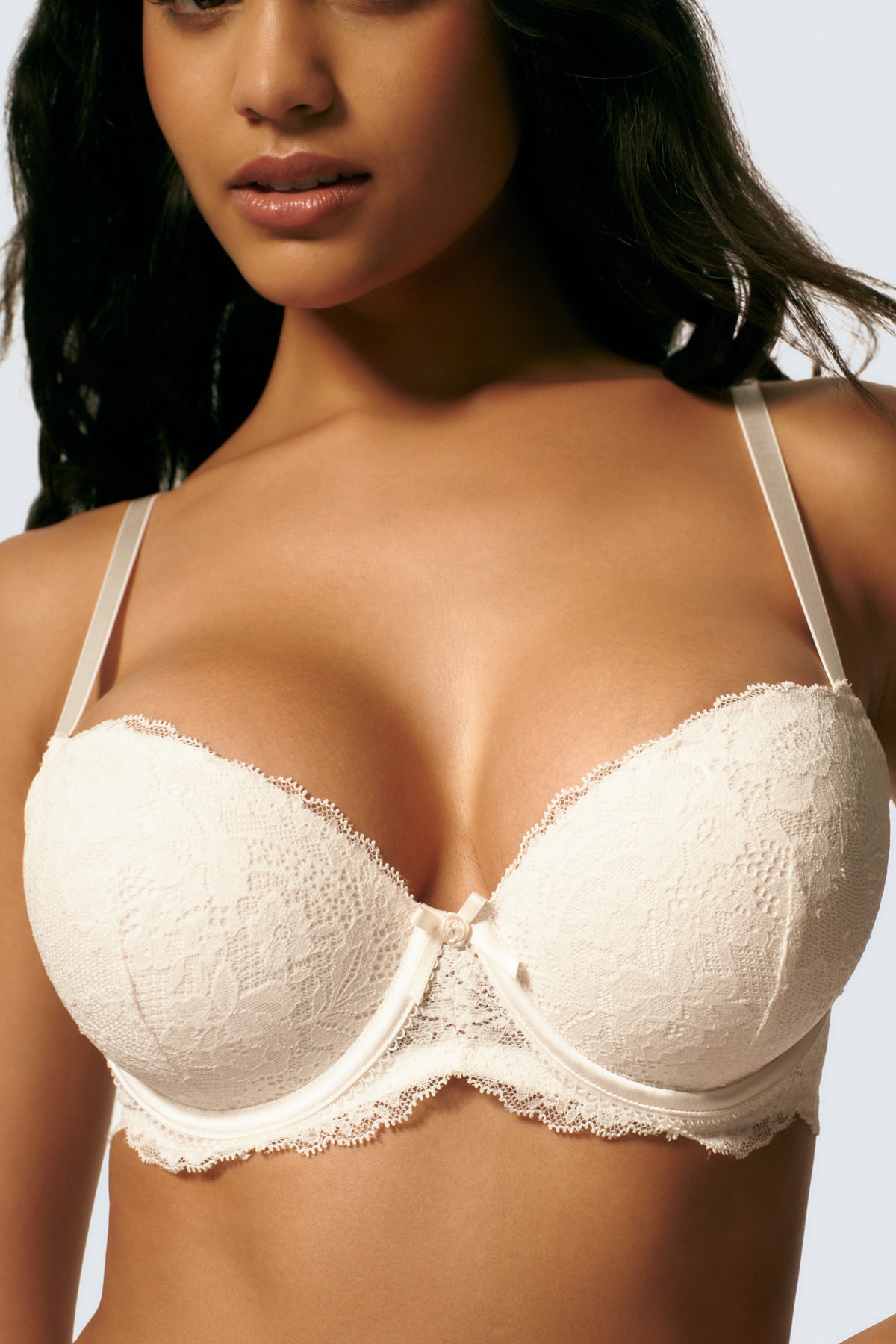
Three things to notice
Where are you full, how close are you, and which way do you point?
Look without judging. Breast shape can change with age, hormones, pregnancy and weight, and asymmetry is normal. These descriptions are starting points—not boxes.
Fullness
More volume can sit above or below the nipple, or be evenly distributed.
Spacing
Your breast roots may sit close together, farther apart or somewhere between.
Direction
Tissue and nipples can face forward, outward or in different directions from one side to the other.
Shape guide
Find the description that sounds most like you.
Close-set
Little space sits between the breasts. A lower or narrower center front may feel more comfortable.
Wide-set or east-west
More space sits at the center or tissue points outward. Side support can encourage a centered shape.
Full on top
More volume sits above the nipple. An open top edge or stretch cup can give that fullness room.
Full on bottom
More volume sits below the nipple. Demi and balconette shapes can follow the upper curve without excess cup space.
Round
Fullness is fairly even above and below. Many silhouettes can work; choose by neckline and desired effect.
Shallow or athletic
Tissue spreads across a wider base with less projection. Lower-profile cups may sit more smoothly.
Asymmetric
One breast is larger or shaped differently. Fit the larger side, then adjust the smaller with the strap or a removable insert.
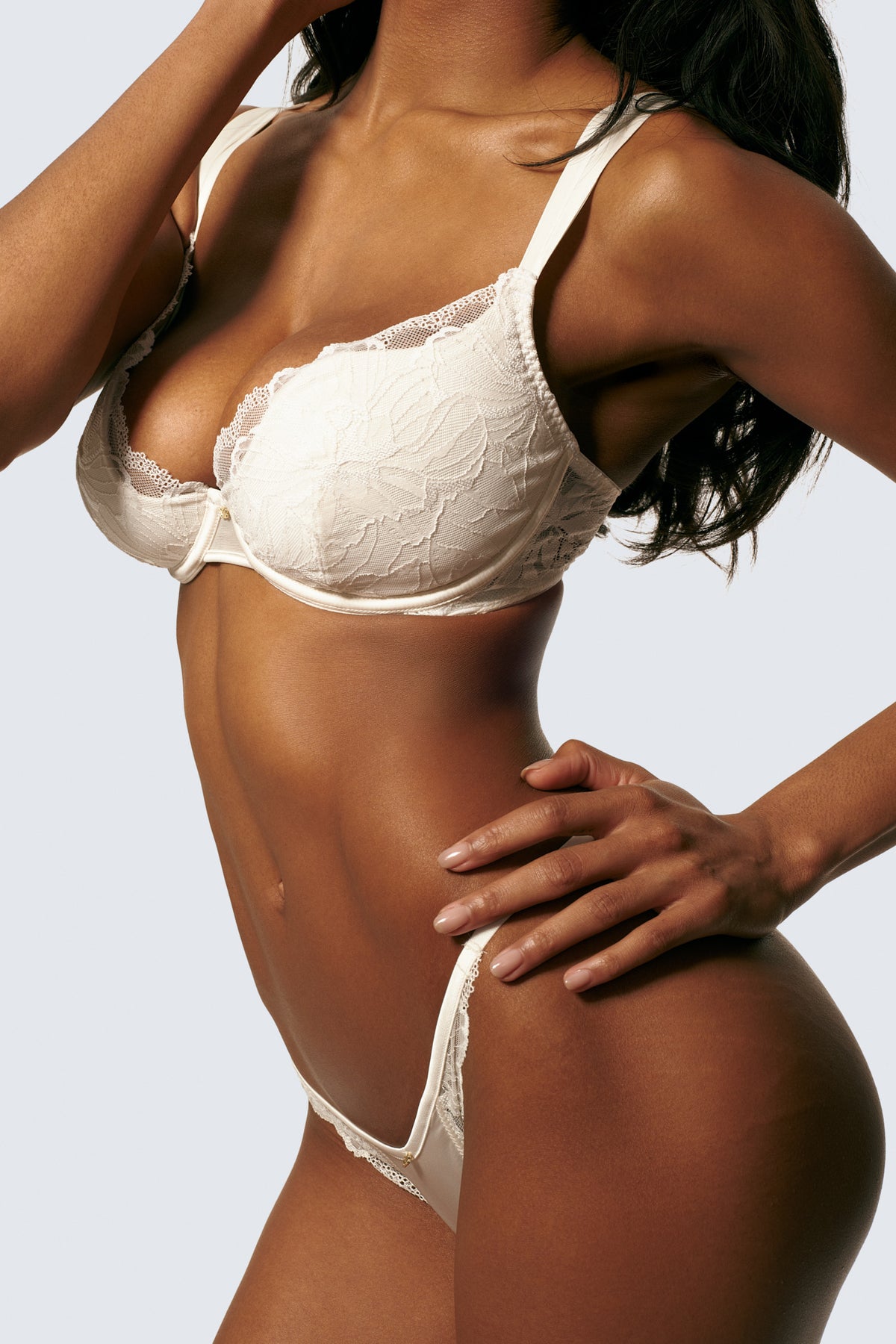
Start with capacity
A shape match cannot fix the wrong cup size.
The center should sit comfortably close, the wire should contain the whole breast root, and the neckline should not spill or gape. If those checks fail, revisit size before ruling out the silhouette.
Use the size guideRead the signals
What the fit is trying to tell you
| What you notice | What it may mean | Try next |
|---|---|---|
| Center digs or lifts away | Not enough cup capacity | A larger cup |
| Tissue spills at the top or side | Cup is too small or too closed | More capacity or a more open top edge |
| Empty space at the neckline | Cup is too large or too projected | A smaller or shallower cup |
| Band rides up | Band is too loose | A smaller band with adjusted cup size |
| Straps dig | The band is not doing enough | Recheck band and cup fit |
Shape questions
Your body is not the fit problem
- How do I know my breast shape?
Notice where you carry fullness, how much space sits between your breasts and whether the tissue points forward or outward. Check while unsupported if comfortable.
- Can two people with the same bra size need different styles?
Yes. The same volume can be distributed very differently, so cup depth, top edge and center-front shape may suit each person differently.
- What bras suit close-set breasts?
A low or narrower center front is often a comfortable place to start because it leaves more room between the cups.
- What bras suit east-west breasts?
Look for cups that fully contain the sides. An internal side sling can guide tissue inward if you want a more centered shape.
- Should I fit the larger breast?
Yes. Fit the larger side first, then shorten the strap or add a removable insert on the smaller side if needed.
- Does breast shape change?
It can. Hormones, pregnancy, age and weight changes can affect fullness and tissue distribution, so it is worth checking your fit again over time.
Size is only the beginning