





Corsets
How to Lace a Corset: Start With the Bunny Ears
The bunny ears control the waist, the gap should stay parallel, and a new corset should never be pulled tight on day one. Here is how to lace, fit and wear real steel-boned corsetry.
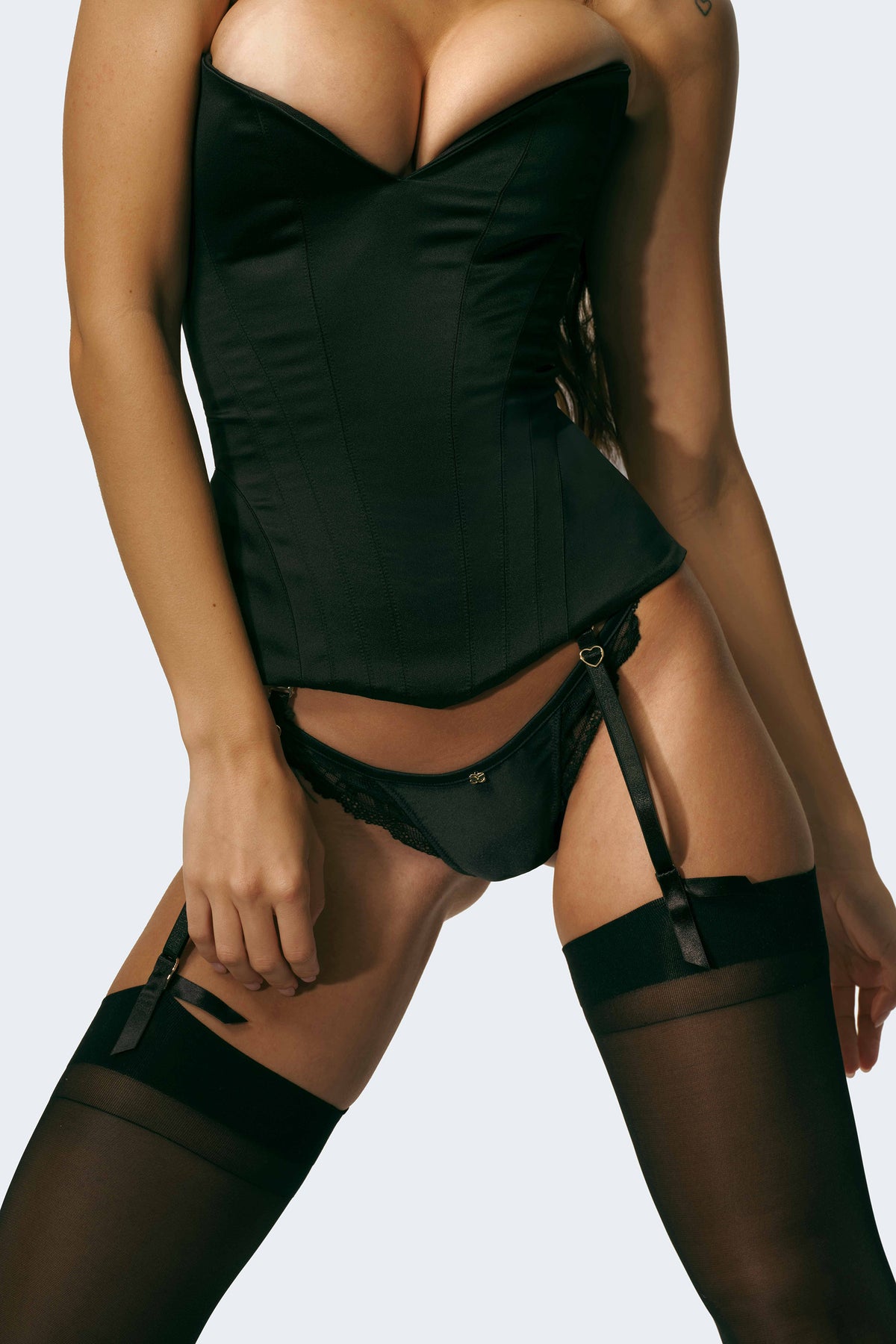
Built differently
Boning turns fabric into structure.
A true corset uses vertical bones to resist folding and distribute tension through the torso. SYRN corsets use steel boning for structure that can shape without depending on stiff padding.
Steel versus plastic
Steel boning is stronger and more durable than lightweight plastic boning. Plastic can suit fashion pieces, but it is more likely to bend permanently under sustained tension.
Shape without a shortcut
Boning, panels, fabric and lacing work as one system. A corset should feel evenly secure rather than sharply tight in one isolated place.
The lacing method
Build the bunny ears at the waist.
If your corset arrives unlaced, work from top to waist and bottom to waist so the longest loops land where your natural waist sits.
Find the waist
Identify the narrowest point of the corset. This is where the two long pulling loops—the bunny ears—should sit.
Criss-cross from the top
Thread the lace evenly through each eyelet pair, keeping both ends the same length as you move toward the waist.
Create the ears
At the waist, leave a generous loop on each side. These loops will do the tightening when the corset is on.
Finish from the bottom
Lace upward toward the waist, then tie off the remaining ends without joining them to the bunny-ear loops.
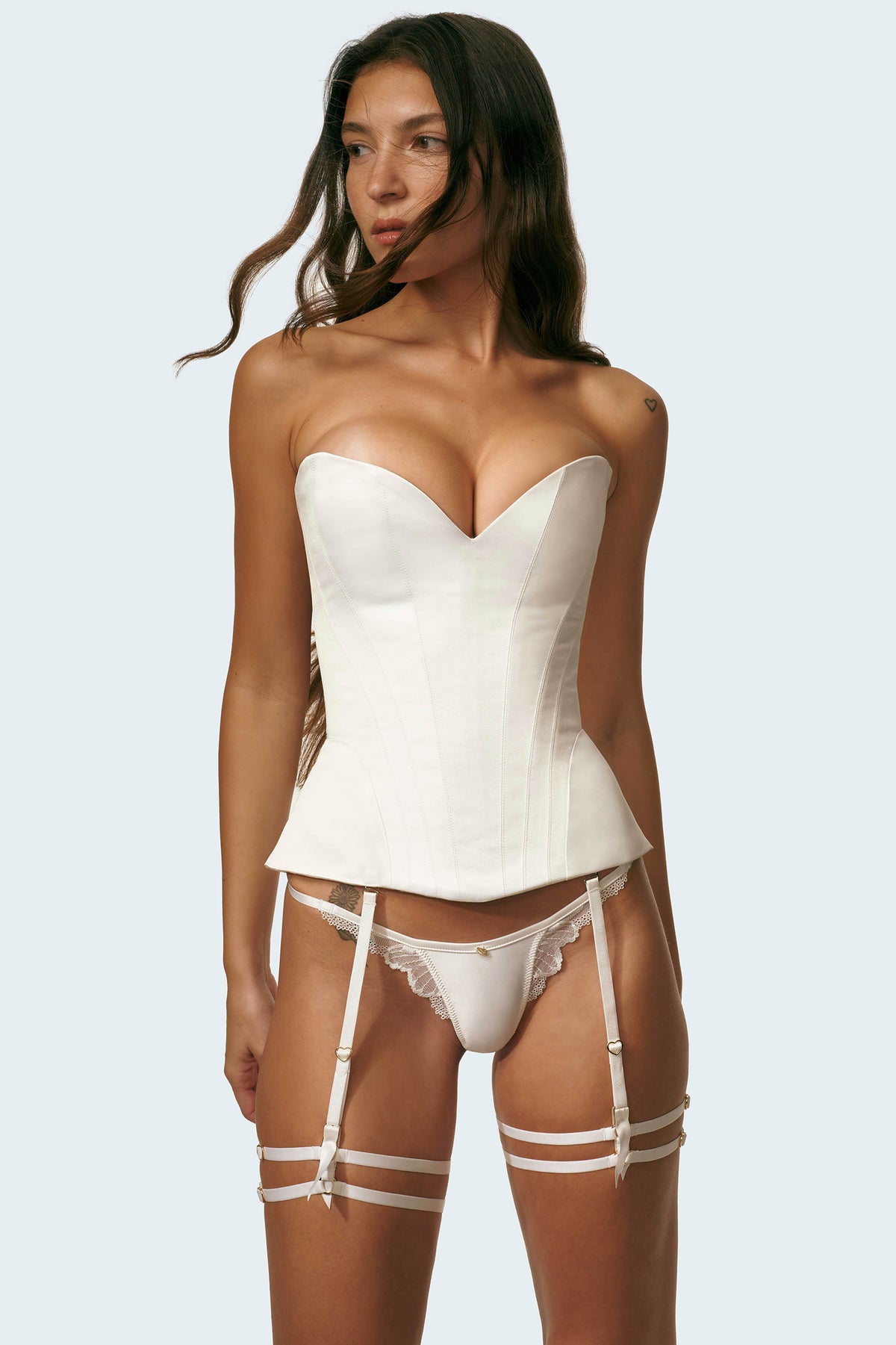
Putting it on
Loose first. Even second. Tight last.
- Loosen the back laces enough to wrap the corset without strain.
- If the style has a front busk, fasten it while the back remains loose.
- Center the corset, then pull the bunny ears gradually.
- Work slack from the top down and bottom up toward the waist.
- Tie the bunny ears in a bow; do not wrap them around the waist.
For extra leverage, loop the bunny ears over a secure door handle and gently step forward while guiding the slack toward your waist. Stop if the pressure feels sharp or uneven.
Read the back
The gap should stay parallel.
The two back edges should look like straight vertical lines. A visible gap is normal; its shape tells you whether tension is even.
| Gap shape | What it suggests | What to do |
|---|---|---|
| Parallel: | | | Balanced tension through the torso | Keep tightening evenly |
| Wider at top: / \ | More room is needed above the waist | Redistribute slack; reassess fit if it persists |
| Wider at bottom: \ / | More room is needed below the waist | Redistribute slack; reassess fit if it persists |
| Bowed: ( ) | Too much tension at the waist | Loosen and even out the lacing |
Seasoning
Your first wear is an introduction.
A new corset needs time to settle to your body. Wear it gently and loosely for short periods at first, increasing time and tension gradually. The goal is even molding—not immediate maximum reduction.
Listen to your body: normal pressure should feel distributed and controlled. Numbness, pain, pinching or difficulty breathing means loosen or remove the corset immediately.
Know the category
Corset, bustier or basque?
| Style | Structure | Primary effect |
|---|---|---|
| Corset | Boned and shaped through the torso, often back-laced | Defined waist and structured silhouette |
| Bustier | Bra-led top extending toward the waist | Bust support with a structured top line |
| Basque | Longline lingerie with light-to-moderate structure | A smooth, elongated lingerie silhouette |
| Bodysuit | One-piece joining top and brief | Continuous base layer or outfit |
Corset questions
Before you pull the laces
- What are bunny ears on a corset?
They are the two long lacing loops positioned at the natural waist. Pulling them tightens the corset from both directions.
- Should the back of a corset close completely?
Not necessarily. A visible gap can be correct, but the two back edges should remain roughly parallel.
- How tight should a new corset be?
Start comfortably loose. Increase wear time and tension gradually as the corset settles to your body.
- What is corset seasoning?
Seasoning is the gradual process of wearing a new corset for short periods at light tension so its materials begin to mold evenly.
- Can I lace a corset by myself?
Yes. A mirror helps, and the door-handle method can add gentle leverage. Tighten in small passes and keep the corset centered.
- How do you clean a corset?
Follow the garment’s care label. Structured corsets often need spot cleaning or specialist cleaning rather than soaking or machine washing.
Structure, on your terms